
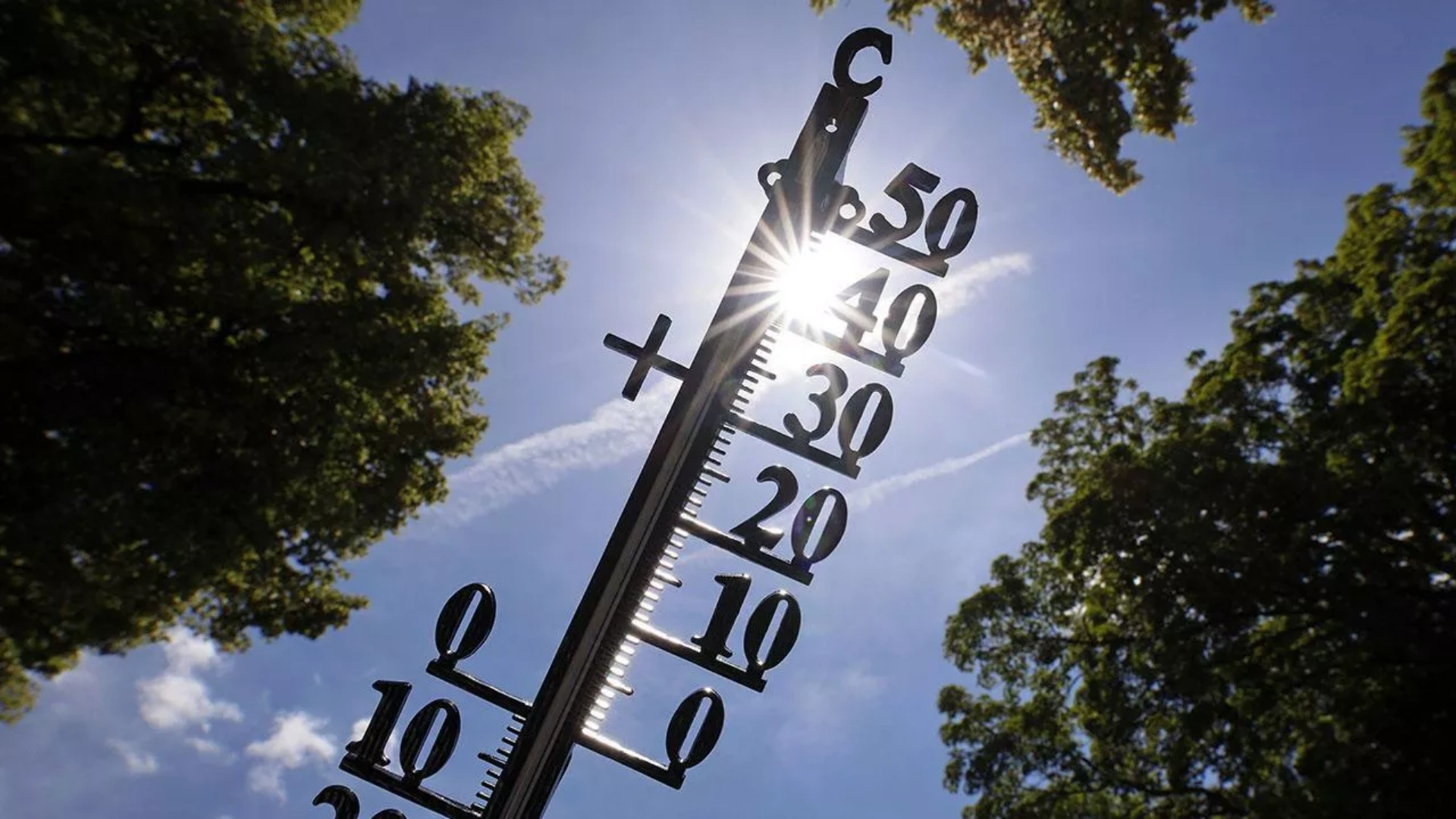
In 2025, the global average temperature rose to 1.47 degrees Celsius above pre-industrial levels, making last year the third warmest year on record. Experts noted that the threshold set under the Paris Agreement was exceeded during the 2023–2025 period.
Rising global temperatures remained close to record levels in 2025. According to data published by the Copernicus Climate Change Service (C3S) of the European Centre for Medium-Range Weather Forecasts (ECMWF), 2025 ranked as the third warmest year on record.
Copernicus analysis showed that the global average surface temperature last year was measured at 14.97 degrees Celsius. This indicates an increase of 1.47 degrees above the pre-industrial average. As a result, 2025 ranked third among the warmest years on record, following 2024 and 2023.
The World’s Warmest Years Occurred in the Last 11 Years
In 2024, the warmest year on record, the global temperature increase reached 1.6 degrees Celsius above pre-industrial levels, while in 2023 the increase was calculated at 1.48 degrees. Copernicus emphasized that long-term global warming levels are currently around 1.4 degrees above pre-industrial levels.
The latest data also reveal the persistence of global temperature increases. Accordingly, the past 11 years have been recorded as the 11 warmest years worldwide. In addition, the 2023–2025 period became the first three-year span in which average temperatures exceeded 1.5 degrees above pre-industrial levels.
2025 Ranked as the Third Warmest Year
Meanwhile, California-based research organization Berkeley Earth confirmed in a simultaneous analysis that 2025 was the third warmest year recorded since 1850. According to the analysis, 2024 remains the warmest year, while 2023 retains second place.
ECMWF Director-General Florian Pappenberger stated that the world is currently experiencing its warmest ten-year period on record and highlighted the decisive role of scientific data in the fight against climate change.
C3S Director Carlo Buontempo emphasized that all of the past 11 years being marked by record temperatures is a clear indication of climate change, adding: “The world is rapidly approaching the long-term temperature limit set by the Paris Agreement. Exceeding this limit now appears inevitable. The most important task at this stage is to manage the impacts of this exceedance on societies and natural systems in the best possible way.”