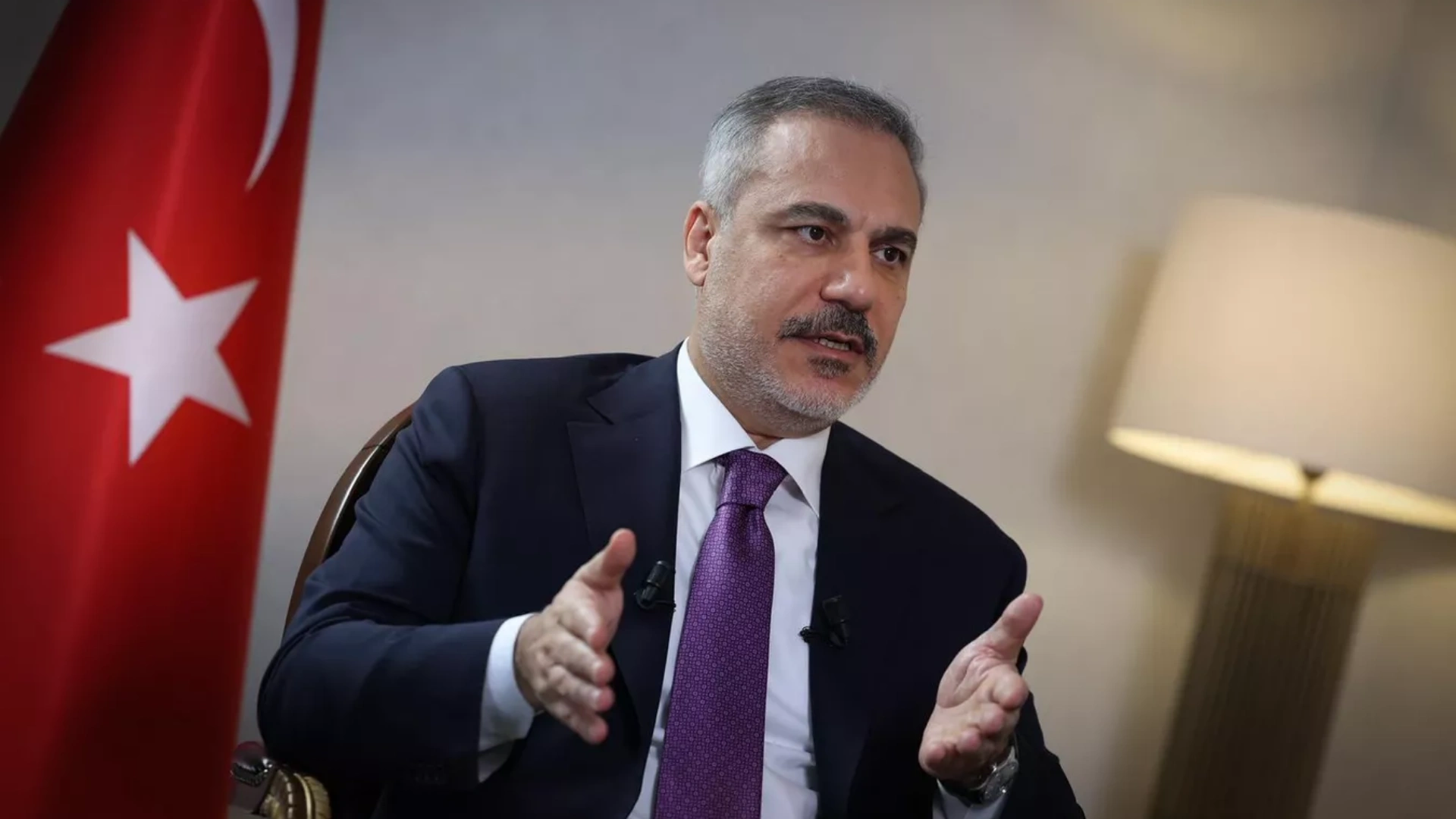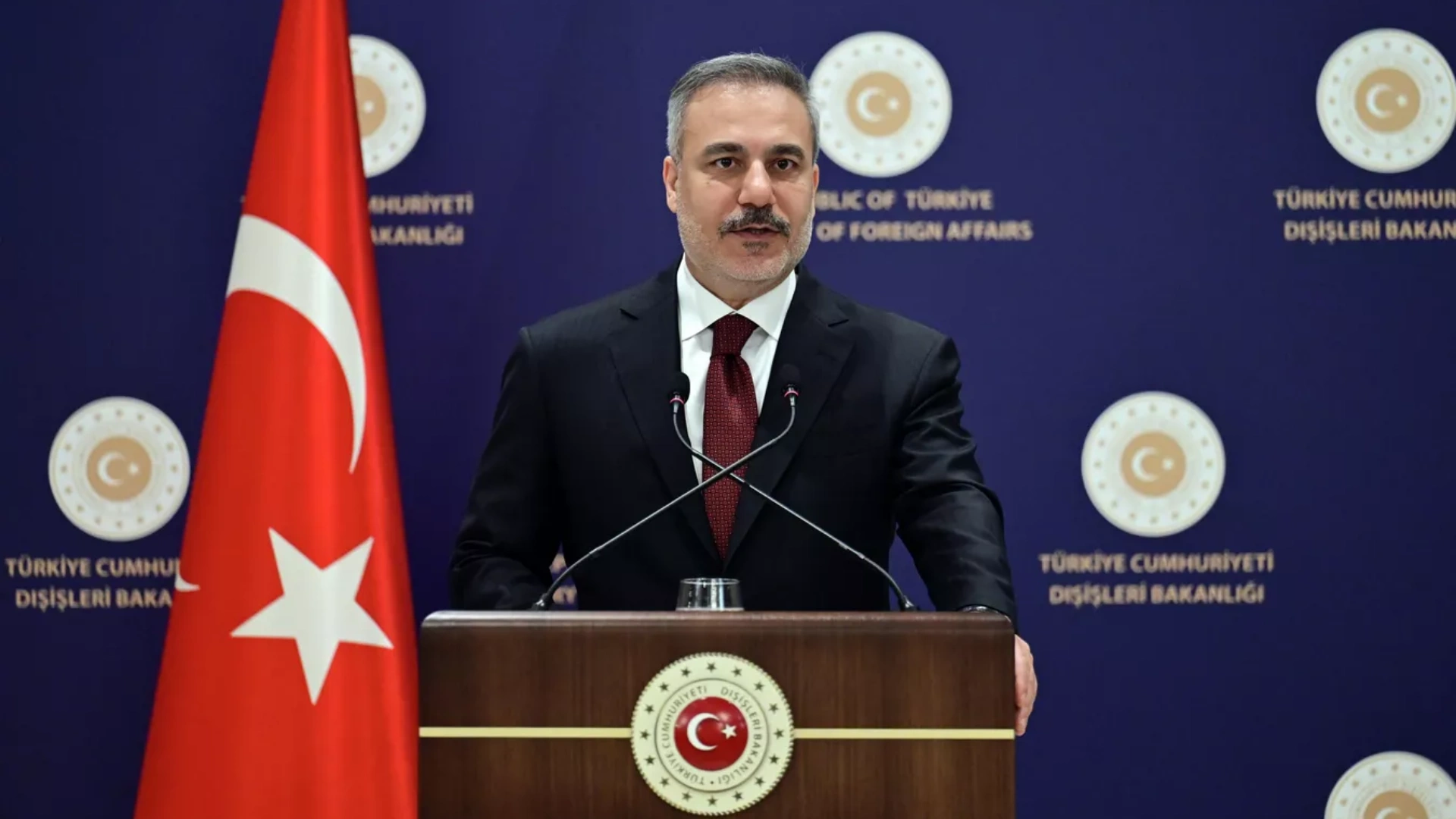
Foreign Minister Hakan Fidan spoke at the annual evaluation meeting held in Istanbul. Stating that “Türkiye is closely monitoring developments in Iran,” Fidan said, “We will continue our efforts,” and emphasized, “We are against military intervention in Iran; they should resolve their authentic internal issues themselves.”
Key Points from Foreign Minister Hakan Fidan’s Remarks:
The genocide taking place in Gaza has become the gravest and most urgent issue on the agenda of 2025 in terms of international law and humanitarian values.
It must be stated clearly that today’s global governance model has failed this test.
In the coming period, transforming the ceasefire into lasting peace and ensuring that Palestinians live in peace and security remain priorities.
The Russia–Ukraine crisis has also brought discussions questioning established patterns in transatlantic relations.
As Türkiye, we have made very intensive efforts to establish peace.
Debates on the European security architecture will likely remain on the agenda for many years.
Meanwhile, the major transformation Syria has been undergoing has constituted one of the most significant developments of 2025.
The SDG issue continues to be a problem for Syria and the rest of our region.
As Türkiye, we will maintain our determined stance on this issue in 2026 as well.
Iran Question: We Will Continue Diplomatic Efforts
As you know, the issue we have prioritized from the very beginning is regional stability and security.
We are against a military intervention in Iran; Iran must resolve its own authentic internal problems itself.
One of the long-standing problems in our region is the sanctions Iran has faced for many years and political incompatibilities within the region.
As a friend of Iran, we share our views sincerely. We have a centuries-old border. The two peoples resemble each other.
Anything that happens in Iran concerns us closely, and therefore we are monitoring these developments very carefully.
It is in our interest that Iran resolves its problems with key actors.
Our priority is that force is not used.
We saw this during the 12-day war as well. Iran faced an attack by the United States. The recurrence of such a situation is not something we approve of.
We want problems to be resolved through diplomatic means. We will continue diplomatic efforts.
Hopefully, the United States and Iran will resolve this issue either through mediators or directly between themselves.
Syria: The Constitutional Citizenship Formula We Seek
The March 10 agreement could not be implemented because steps were not taken to enforce it.
The Syrian administration does not lack the need for this. This is both our expectation as a neighboring country and an issue already on their agenda.
However, the critical balance lies here: viewing themselves as a separate element within a framework of constitutional minorities is a different matter. This is precisely where the problem arises.
What we want is a constitutional citizenship formula in which people can equally practice their languages and religions while also being integrated into citizenship.
Dividing the region along ethnic or religious lines undermines stability.
I am not saying this as an ideological tool, but in the interest of our shared humanity.
“Once CAATSA Is Lifted, the F-35 and Other Issues Will Also Move Forward”
When CAATSA is lifted, the F-35 issue and other matters will also move forward.
As for the F-35 issue, as you know, this problem emerged as a direct result of the implementation of CAATSA. We do not view the matter solely from the perspective of the F-35.
We have ongoing diplomatic efforts aimed at the complete removal of CAATSA.
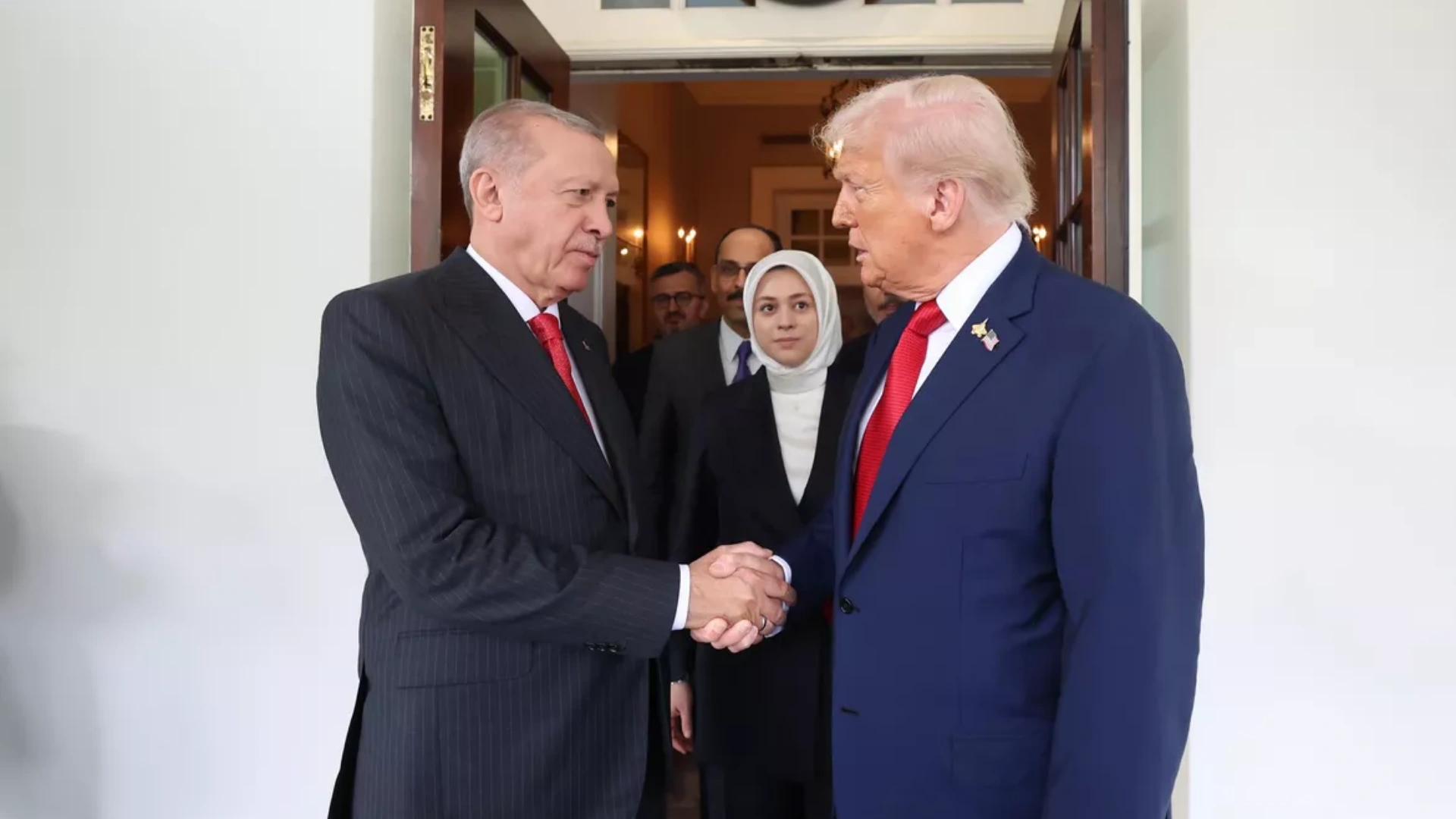
After New York, when our President visited Washington in September last year, on September 25, a political will emerged following the agreement reached between President Trump and President Erdoğan to remove this issue—along with others—from the bilateral agenda.
I have stated this before. We are now working to overcome the technical difficulties and problems preventing the implementation of this mutual political will.
This will exists. Hopefully, this year we will witness the lifting of CAATSA, and as you mentioned, the F-35 and other related issues will also come into effect.
Visa Issue and Migration in Europe
As for the visa issue, the EU has moved to a single visa system. In practice, you apply to a single country, which creates an administrative challenge.
During the pandemic, systems were shut down; now they have regained capacity, and problems are being resolved in certain areas.
The more influential dimension is that migration has become a political tool in Europe.
Those pursuing such policies are increasingly gaining ground.
Whether a doctor or an engineer, people are judged by their appearance or stance. It is sad to see Europe reach this point.
My concern is that mass migration has already largely stopped—they know this as well—but the far right needs this issue to generate momentum.
Europe may evolve toward making internal politics, rather than external migration, the central focus of its political agenda.