
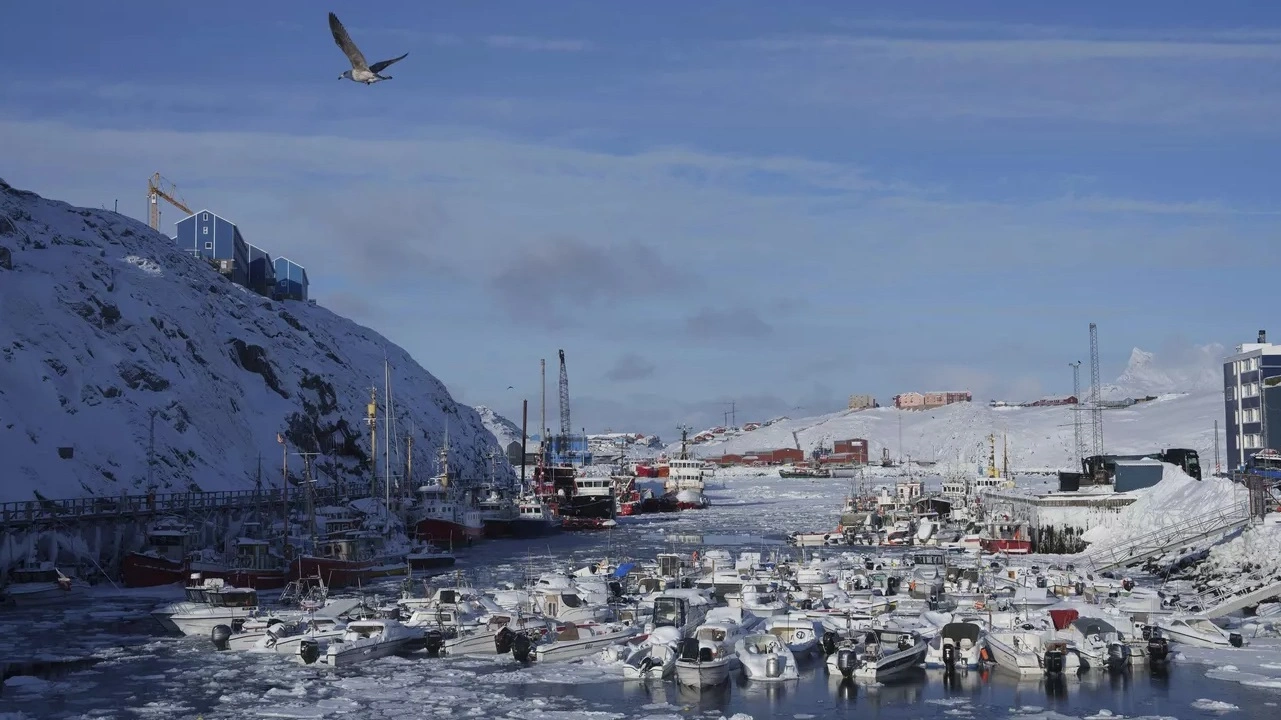
Experts have commented on reports in the Western press claiming that the United Kingdom and Germany are preparing to send troops to Greenland in opposition to alleged U.S. invasion plans.
According to Sputnik, retired German Army Major Florian Pfaff stated that plans by the UK and Germany to deploy troops to Greenland are intended as a “Stop!” message to U.S. President Donald Trump.
Pfaff said, “It is true that there is no chance of winning militarily, but I believe this is a political signal. They do not want to tell President Trump ‘Go ahead.’ They want to tell him, ‘Stop conquering Greenland.’ That is why I think this is not a military issue, but a political one.”
Stating that Trump and the U.S. Joint Chiefs of Staff cannot be intimidated militarily, Pfaff added: “But I think they will feel political fear. If Europe does not want to lose Greenland—which would be a major political disadvantage—then the rest of the world would say, ‘You are attacking your allies, and their allies do not want to lose Greenland. Despite all the warnings, you are doing this anyway.’ This would not be a military disaster, but a political one.”
“Aimed at protecting the island from external threats”
Retired Swedish officer Mikael Valtersson also said that plans by NATO member European countries to deploy military forces to Greenland are aimed at protecting the island from external threats.
Valtersson explained that by doing this, European countries want to show that Greenland is not defended by just two dog sleds, as Trump has claimed, and to ease concerns on this issue. He continued:
“In reality, this move is not against external threats, but against the United States. Washington has claimed that Russian and Chinese ships have been seen near Greenland and that Greenland is crucial for U.S. missile defense. Given that European troops would be of no use against ships or ballistic missiles, it is very clear that the real aim is to create deterrence against U.S. plans to annex Greenland. This threshold is essentially not a military one, but a political move. After all, it would not be a difficult problem for U.S. forces to defeat small European ground units. However, any military action against European allies would amount to a death warrant for Europe and would sever the old transatlantic bond.”
Valtersson also noted that a possible move by Europe in this direction could reduce the risk of a U.S. military intervention in Greenland, but warned that it could also backfire and lead to more serious consequences for U.S.–Europe relations.
“Europe wants to have something to negotiate with the U.S.”
Paolo Raffone, director of the Brussels-based CIPI Foundation and a strategic analyst, described the aim of Germany and the UK as “at least demonstrating that they have the capacity to control security and defense within Europe’s borders.”
Comparing this to declarations of intent to form a peacekeeping force after a ceasefire in Ukraine, Raffone said:
“The aim is to have something to negotiate with the United States and to avoid the harsh consequences of being sidelined by the U.S. in the global competition among major powers. The U.S. president and the Pentagon view Europe’s statements as an unnecessary inconvenience.”