
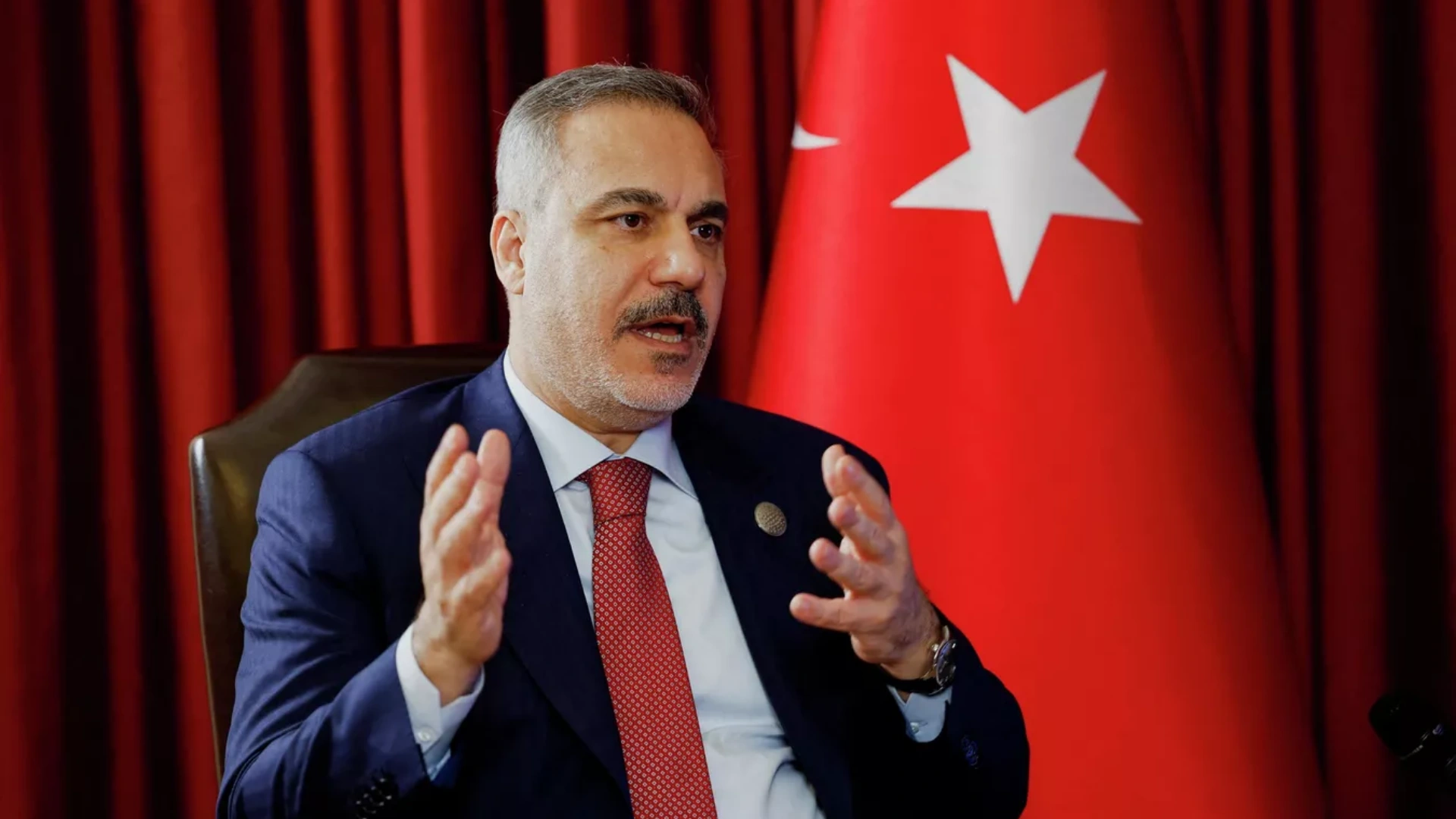
Turkish Foreign Minister Hakan Fidan, in an interview with the Financial Times, said that both the United States and Iran have signaled mutual flexibility in efforts to reach a nuclear agreement, warning that expanding the talks to include Tehran’s ballistic missile program could “drag the region into a new war.”
Speaking to the London-based Financial Times, Fidan stated that the Washington administration appears to be moving toward a more flexible position regarding its key demand that Iran completely halt its uranium enrichment activities. This condition has long been seen as one of the biggest obstacles to an agreement. Iran, for its part, argues that as a signatory to the Nuclear Non-Proliferation Treaty (NPT), it has the right to enrich uranium.
Fidan said the Iranian government “sincerely wants to reach a real agreement” and could accept limits on enrichment levels and a strict inspection regime, similar to the 2015 nuclear deal.
“It is positive that the Americans appear willing to tolerate Iran’s enrichment activities within clearly defined limits,” Fidan said, noting that he remains in continuous contact with U.S., Iranian, and regional officials.
“Iranians see that they need to reach an agreement with the United States. The Americans also understand that Iran has certain red lines. A coercive approach is of no benefit,” he added.
‘The Outcome Could Be a New War’
Fidan warned that the process could stall if the United States attempts to address not only the nuclear program but also Iran’s ballistic missile capabilities and its support for regional armed groups at the same time. He added:
“If the United States insists on addressing all files simultaneously, progress may not even be achieved on the nuclear issue. The outcome could be a new war in the region.”
Indirect Contacts in Muscat
It was reported that U.S. representatives Steve Witkoff and Jared Kushner held indirect talks last week in Muscat, the capital of Oman, with Iranian Foreign Minister Abbas Araghchi. The talks reportedly took place after Turkey, Qatar, Oman, and Egypt intensified efforts to bring the parties back to the negotiating table.
Regional Countries Involved
Fidan said that Ankara and several regional countries are trying to develop “creative ideas” regarding Iran’s ballistic missile program and its ties with regional armed groups, adding that they could play a “constructive and effective role” in this area.
“The United States has deep concerns about Iran’s nuclear capacity. However, the other issues directly concern regional countries. The missiles and proxy forces affect regional security; they do not have global range,” he said.
Fidan also noted that it was a mistake to exclude regional countries from the process leading to the 2015 nuclear agreement, emphasizing that any new accord should include regional confidence-building measures. He added:
“It is important that any agreement Iran reaches with the United States be supported by confidence-building steps with regional countries. There is a serious trust deficit in the region. This dimension must be addressed.”