
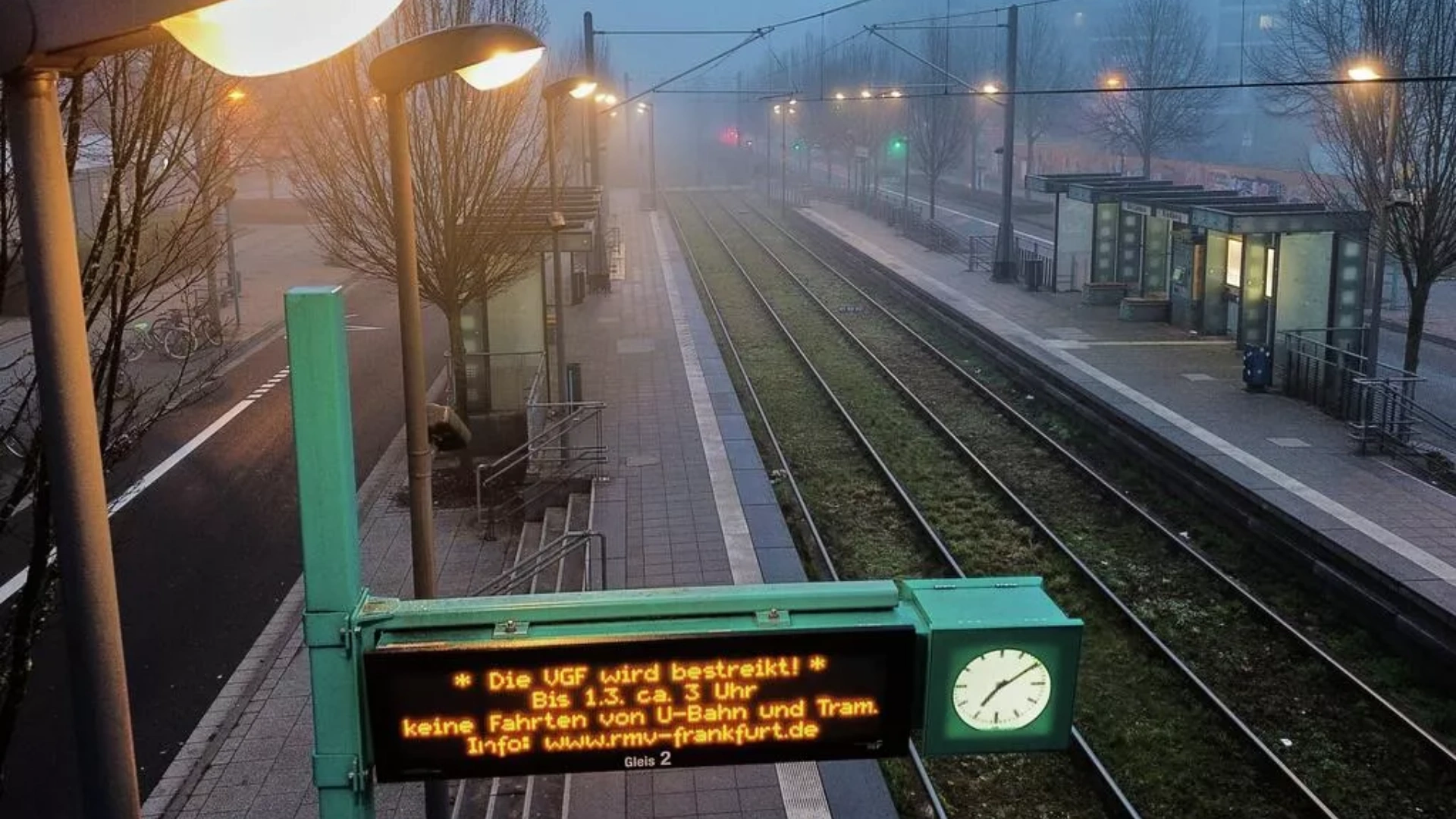
Public transport workers across Germany have launched a two-day warning strike, bringing local transportation in many cities to a near halt. Following protests in February, this marks the second major strike within a month, significantly disrupting bus, tram, and metro services nationwide.
In numerous federal states, public transport staff walked off the job in the early morning hours. The two-day warning strike was initiated after collective bargaining negotiations between unions and employers failed to produce progress, severely affecting urban transportation.
As part of the action, bus, tram, and metro services were almost entirely canceled in many cities. Commuters heading to work and students trying to reach school were forced to seek alternative means of transportation, while some municipalities announced limited emergency services. This strike follows a major nationwide walkout in early February that had largely paralyzed public transport.
Major cities disrupted
In the capital Berlin, employees of the country’s largest public transport company, Berliner Verkehrsbetriebe (BVG), stopped work from 3:00 a.m. onwards. Metro and bus services were suspended.
In some states, strikes are expected to continue until Saturday night, while in Bremen the action will extend until Monday night. In Mecklenburg-Western Pomerania, the strike is limited to Friday only. In Saxony-Anhalt, a walkout in one district will last four days.
Demands: Shorter working hours and additional pay
The United Services Union, Ver.di, is calling for improved working conditions. Its demands include reducing weekly working hours, reorganizing shift and rest periods, and increasing bonuses for night and weekend work. In Bavaria, Brandenburg, Saarland, Thuringia, and Hamburg, wage increases are also among the key demands.
Both the union and employers state that no concrete progress has yet been achieved in negotiations. Berlin’s public transport operator argues that the union has not clearly defined its primary demands.
While it remains uncertain when collective bargaining talks will conclude, there are currently no signs of an imminent agreement in any region. As a result, further strike actions in the coming days are considered possible.