
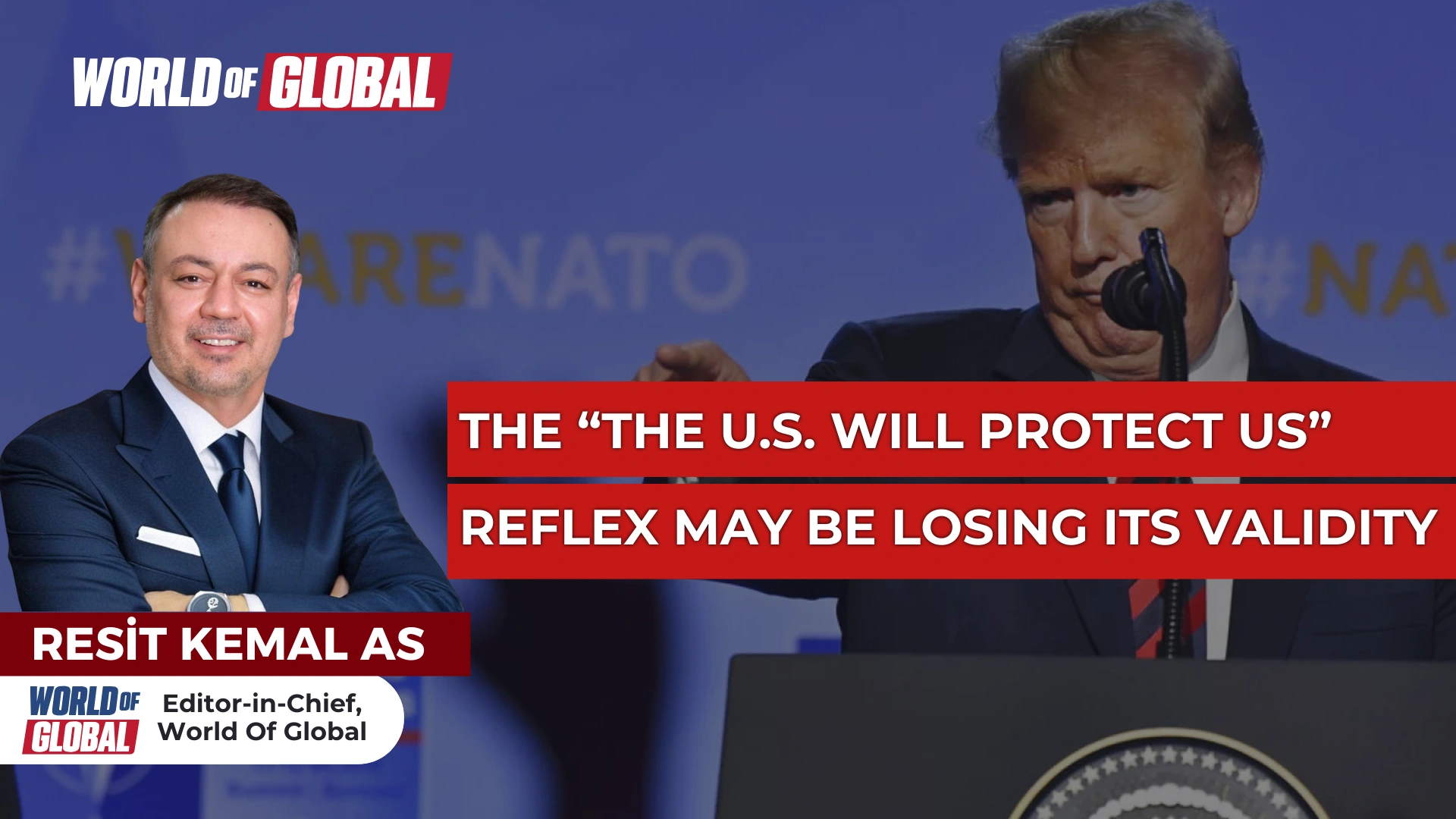
Resit Kemal As / Editor-in-Chief, World of Global
International politics is often described as a game of chess, but the picture we are facing today looks far more like a boxing ring. In one corner stands a figure tightening his gloves once again: Donald Trump. Across from him is not a single opponent, but a scattered, weary alliance still trying to stay on its feet: NATO.
Trump’s test with NATO is nothing new. During his first presidency, he harshly criticized European allies as a “club of freeloaders” and openly targeted countries that failed to increase their defense spending. However, today’s conditions are different. Because in the center of the ring, there are not only allies—but also an active battlefield: Russia’s invasion of Ukraine.
This war has reminded the world of NATO’s core purpose. Yet at the same time, it has laid bare the alliance’s weaknesses. European countries lived comfortably for years under the U.S. security umbrella. But if a new Trump wave rises again in Washington, that umbrella could suddenly shrink.
Trump’s approach is simple yet disruptive: “Pay up or stand alone.” This directly tests NATO’s traditional spirit of solidarity. Because the foundation of the alliance is not just military power, but also political will and mutual trust. If that trust erodes, NATO could turn from a military alliance into a loose security forum.
So, who gets “knocked out” in this process?
The first candidate: Europe’s strategic complacency. Many European countries—especially Germany—have long neglected defense investments. If Trump returns, these nations could find themselves cornered. The reflex of “the U.S. will protect us” may no longer hold.
The second candidate: NATO’s sense of unity. From the perspective of Vladimir Putin, every crack within the alliance is a strategic opportunity. If a Trump administration deepens divisions within NATO, it would strengthen Moscow’s hand—directly affecting the balance on the Ukrainian battlefield.
The third—and most critical—candidate is Ukraine itself. Under the leadership of Volodymyr Zelenskyy, Kyiv has so far stood largely thanks to Western support. However, if Trump’s “America First” policy hardens again, that support could be questioned. In such a scenario, Ukraine may find itself increasingly isolated—not only on the battlefield but also at the diplomatic table.
But there is also a reverse side to the story.
Trump’s pressure on NATO could, paradoxically, strengthen the alliance. European countries may be forced to take their own defense more seriously. A shared threat perception could become more concrete. In other words, while some may fall under heavy blows in the ring, others may be jolted back to their senses.
From Türkiye’s perspective, the picture becomes even more intriguing. With its strategic geography and military capability, Ankara remains one of NATO’s indispensable members. In such a period, Türkiye could stand out with its balancing policy. As one of the rare actors capable of maintaining dialogue with Russia while playing a critical role within NATO, it may emerge as one of the winners of this “test.”
In the end, Trump’s NATO test is not an elimination match—it is a multilayered test of power. No one may fall with a single punch, but everyone will take hits.
The real question is not who will remain standing—
but who will be able to rise again after taking those blows.