
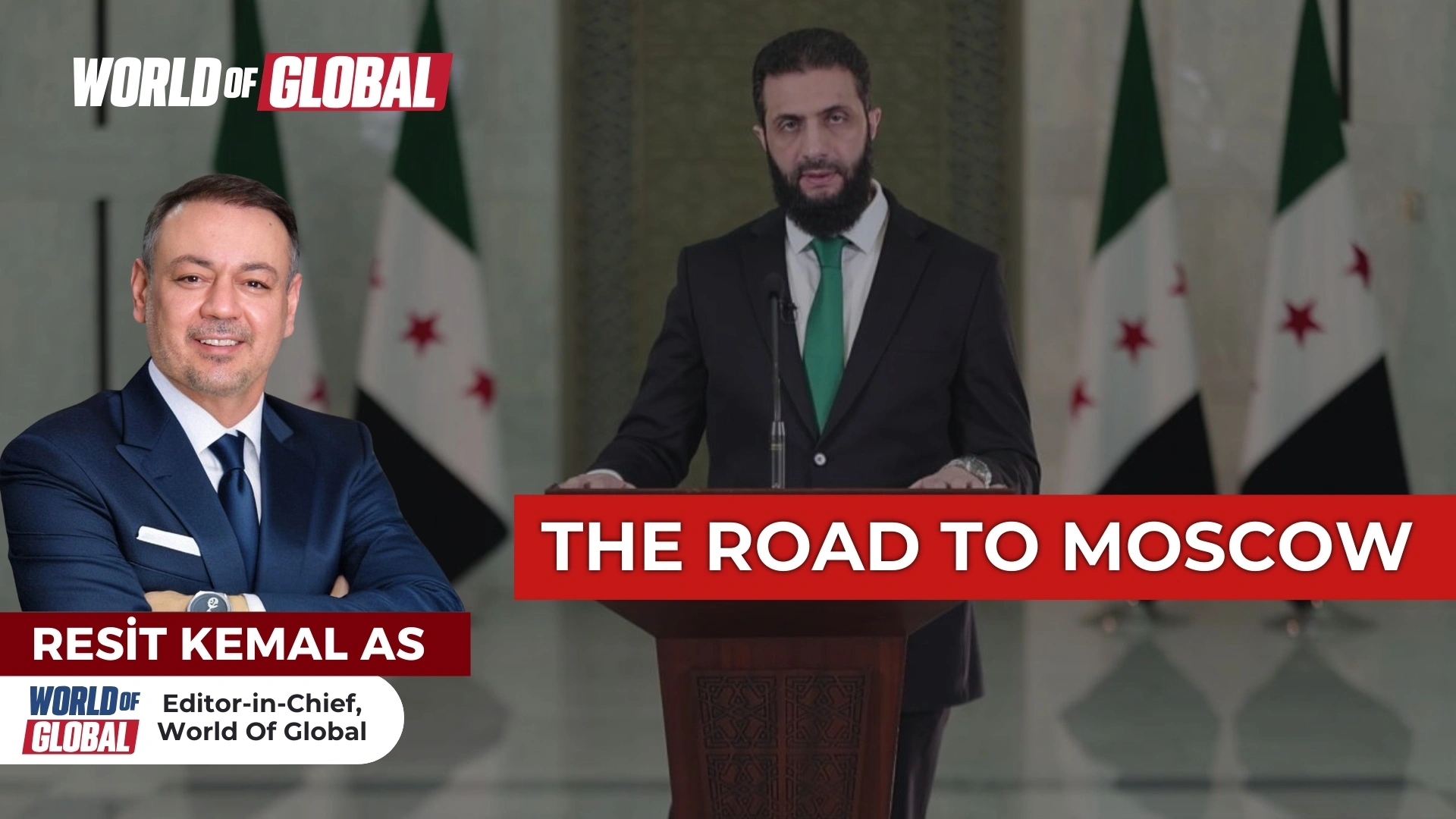
Resit Kemal As / Editor-in-Chief, World Of Global
Ahmet Shara is heading to Moscow for the first time in his capacity as president. This visit is not a courtesy call; it is a delayed but inevitable reckoning. Because Russia has not merely been an actor on the Syrian stage—it has been one of the powers that wrote the rules of the game for a long time. Shara’s trip to the Kremlin signals that this relationship can no longer be managed under old headings.
The question of what Putin and Shara will discuss is important—but equally important is what they will not be able to discuss.
The first item on the agenda will inevitably be Russia’s military presence. The Tartus and Hmeimim bases are Moscow’s gateway to the Mediterranean; for Shara, they represent one of the most sensitive aspects of the sovereignty debate. While Russia will seek to secure this presence, the Shara administration will want to redefine it in terms of “duration, scope, and political balance.” This will not be an open confrontation, but a quiet negotiation.
The second major topic is Syria’s new political architecture. Shara is trying to project a governing profile that is more balanced and outward-looking, distancing itself from the absolute security-centric reflexes of the past. Putin, on the other hand, wants stability—but stability as he defines it. For Moscow, the key concern is that Syria does not pivot suddenly and uncontrollably toward the West. At this point, the Kremlin will seek a “balance pledge” from Shara.
The third topic is the economy and reconstruction. A war-weary country is struggling to breathe under sanctions. Russia here represents both an opportunity and a constraint. Moscow may offer investments, energy cooperation, and infrastructure projects—while seeking long-term privileges in return. This is where Shara’s real test begins: there is a need for assistance, but without creating new dependencies.
What is most critical, however, is the message this visit sends to regional balances. Shara’s trip to Moscow is not a “break from Russia,” but a declaration that he is “not confined to a single axis.” At the same time, it sends a message to the West: I am not without alternatives. This move could strengthen Shara’s hand, but if misread, it could also open the door to new pressures.
Turkey, Iran, and the Gulf countries will be watching this visit closely. Because the balance established in Moscow could translate into new positions on the ground. For Iran in particular, this meeting is a warning sign. A direct and strong relationship between Russia and Shara could narrow Tehran’s room for maneuver in Syria.
In short, this visit is not the announcement of an alliance, but a search for balance. Shara will want to tell Putin:
“I do not deny the past, but I will not allow you to write the future alone.”
Putin, most likely, will respond:
“If you want balance, you must first accept realities.”
There will be handshakes in Moscow, smiles in front of the cameras. But the real substance lies in the sentences spoken behind closed doors. Because what will change at the end of this visit is not only Syrian-Russian relations, but the answer to a much bigger question: which axis Syria will walk on.
And that answer may force many calculations in the Middle East to be reopened.