Due to Israel’s attacks on the Gaza Strip and the years-long blockade, hundreds of Palestinians who have lost their homes or been forcibly displaced are welcoming Ramadan under the shadow of deprivation and uncertainty inside a heavily damaged school building in northern Gaza City.
Classrooms that once echoed with children’s voices have now turned into narrow, dark shelters carrying the hopes and fears of families fleeing bombardment.
The building’s walls are cracked, its windows shattered, and its infrastructure has collapsed. There is neither electricity nor sufficient clean water.
Because Israel has not allowed gas to enter the Gaza Strip, fuel supplies are nearly exhausted. Families try to cook their meals over small fires lit in front of the classrooms, surrounded by smoke and the smell of soot.
Not just one family, but hundreds who lost their homes in Israeli attacks or were forcibly uprooted are taking shelter in the school.
For these families, Ramadan is not only about worship and patience, but another name for survival.
Modest iftar tables set up among the remnants of destroyed lives, the smoke of small fires, and classrooms plunged into darkness stand as a silent yet profound testimony to a grave humanitarian tragedy.
Some managed to escape the rubble of their homes with their lives; others were forced onto the roads without being able to take even a single belonging. What unites them all is the shared fate of destruction, the weight of loss, and deep uncertainty about tomorrow.
“There Is No Gas, We Do Everything Over Fire”
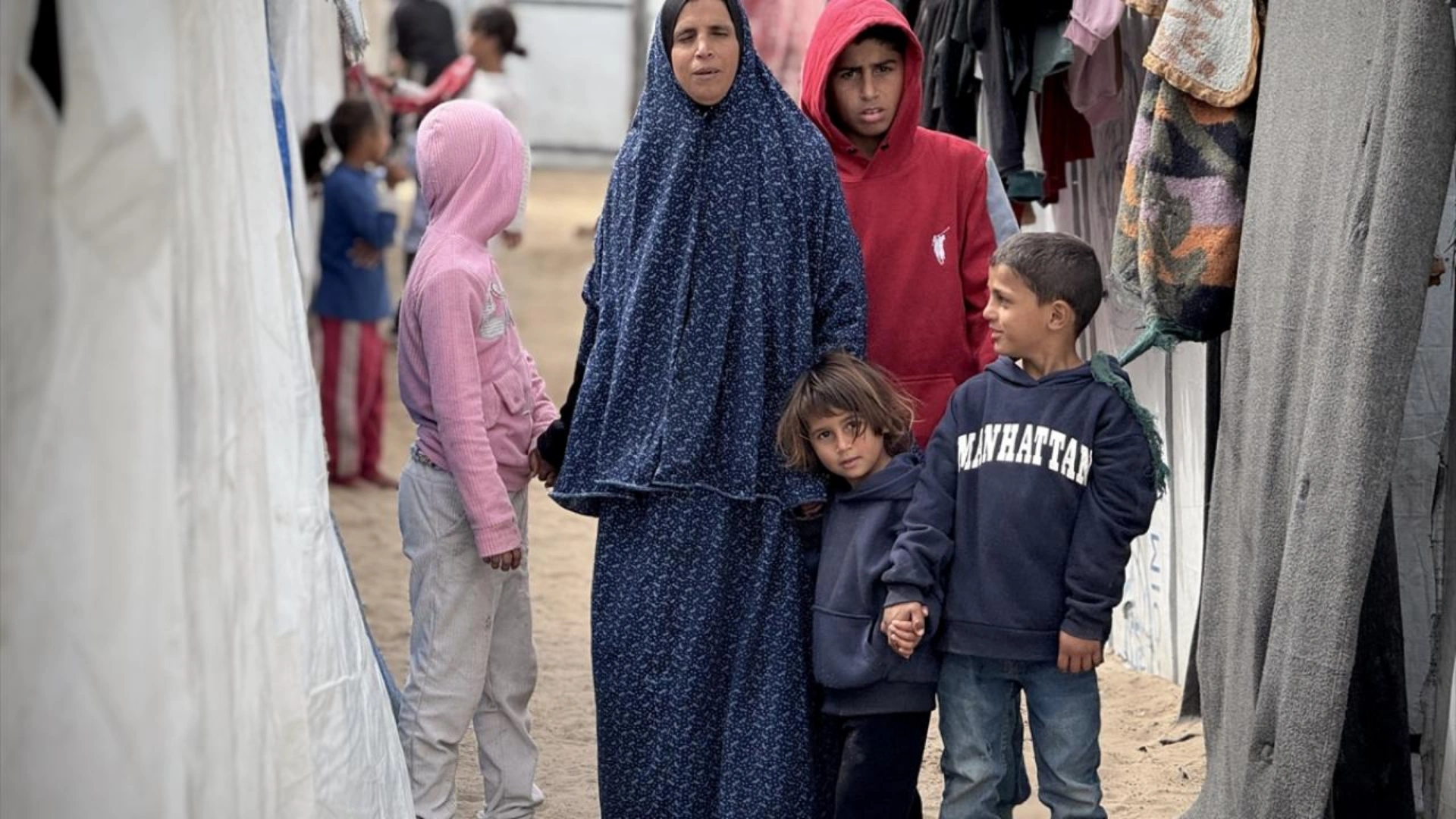
One of these families is the Hamad family, consisting of Dihani Hamad and her 11 children.
In a crowded classroom, shoulder to shoulder with other families, they struggle to hold on and survive without privacy or even the most basic living conditions.
Speaking to an AA correspondent, Palestinian mother Dihani Hamad said they are forced to cook all their meals over fire because there is no gas. “There is no gas; we do everything over fire. We prepare the meal five minutes after the call to prayer. All of this is an additional hardship,” she said.
Hamad noted that Ramadan normally means peace, abundance, and large family tables, but the past two Ramadans have passed under the shadow of war, destruction, and displacement.
“Before the war, everything would be ready half an hour before iftar. Now we don’t even have the means for suhoor. Everything is done over fire, under difficult conditions,” she said, expressing how hard it is to put their desperation into words.
Security Concerns and Losses
Emphasizing that the conditions in the school go beyond poverty, Hamad said she constantly lives with anxiety and fear, especially for the safety of her daughters.
“I have seven daughters. I am even afraid for them to step outside the classroom door,” she said, adding that attacks and ongoing security concerns have become an unavoidable part of daily life.
Hamad also said she lost her husband in Israeli attacks and that her children were injured. “My husband was martyred, and my children were wounded. God protected us with His grace,” she said, voicing her grief.
Life Under Blockade and Destruction
A large portion of Gaza’s population of approximately 2.4 million has been displaced.
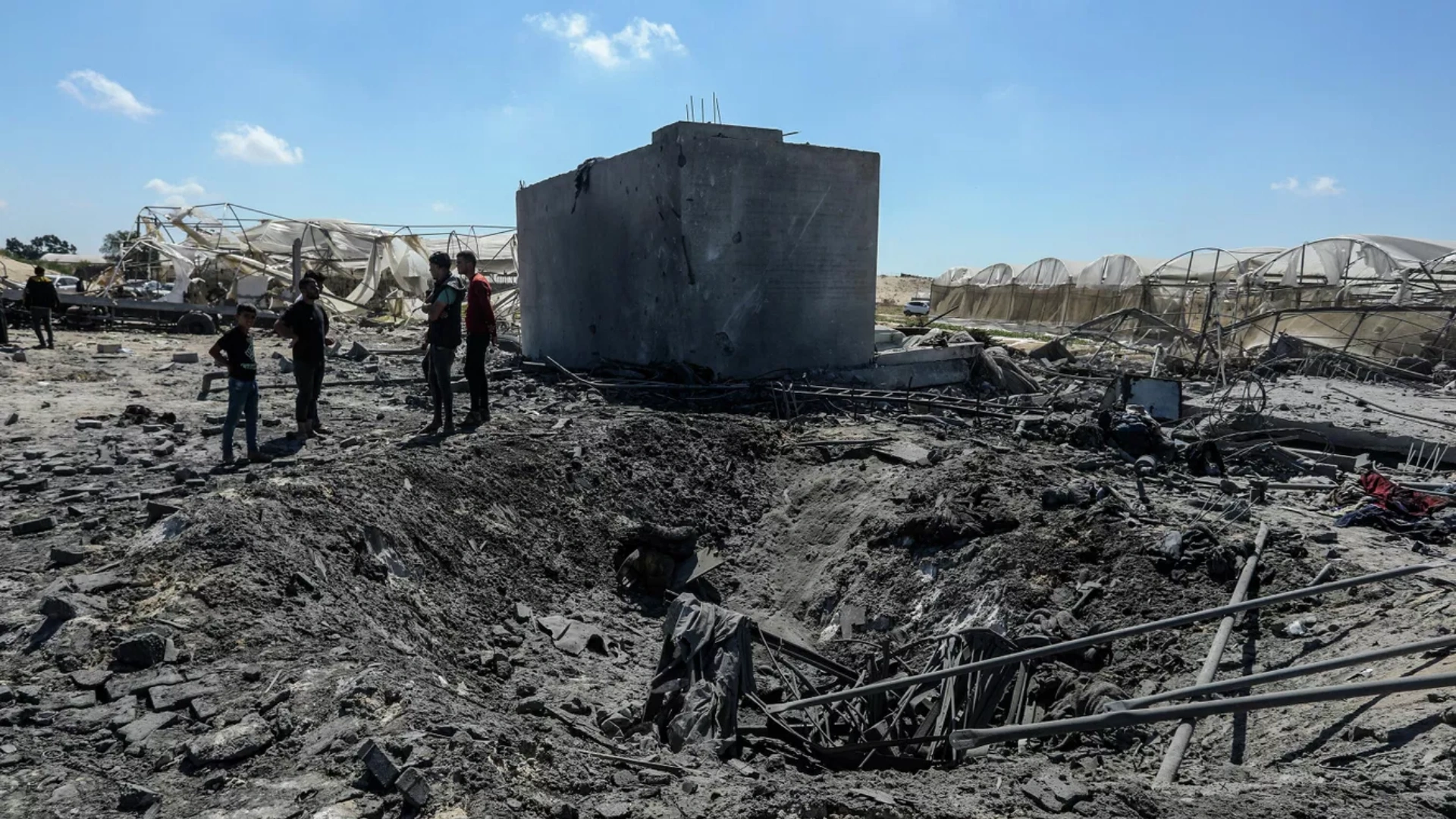
As a result of Israeli attacks, much of the housing, schools, and infrastructure have been destroyed. The electricity grid has collapsed, water lines have been damaged, and health and education facilities are no longer functional.
The blockade imposed by Israel for years has worsened further amid what Palestinians describe as genocidal attacks; restrictions on the entry of fuel, food, and basic humanitarian aid have made civilians’ struggle for survival increasingly difficult with each passing day.
Damaged schools, tent camps, and temporary shelters have now become the only refuge for hundreds of thousands of people in the Gaza Strip.