Resit Kemal As / Editor-in-Chief, World of Global
The Eastern Mediterranean in recent years has turned into a field where not only energy competition but also political narratives are being tested. The warships sent toward the Greek Cypriot Administration of Southern Cyprus by several European countries have become the latest link in this debate.
The statement coming from European capitals is particularly striking:
“We must ensure the security of our European Union member.”
At first glance, it sounds like a diplomatic message of solidarity. However, when examined more closely, a serious contradiction emerges.
Because the European Union, by its founding purpose and legal structure, is not a military alliance. The EU is a union built on economic integration and political coordination. The common market, free movement, financial regulations, and economic cooperation form the foundation of this structure.
In other words, the European Union is not a defense pact, but an economic and political union.
When it comes to military defense mechanisms, the counterpart in the international system is clear: NATO.
But here another contradiction appears.
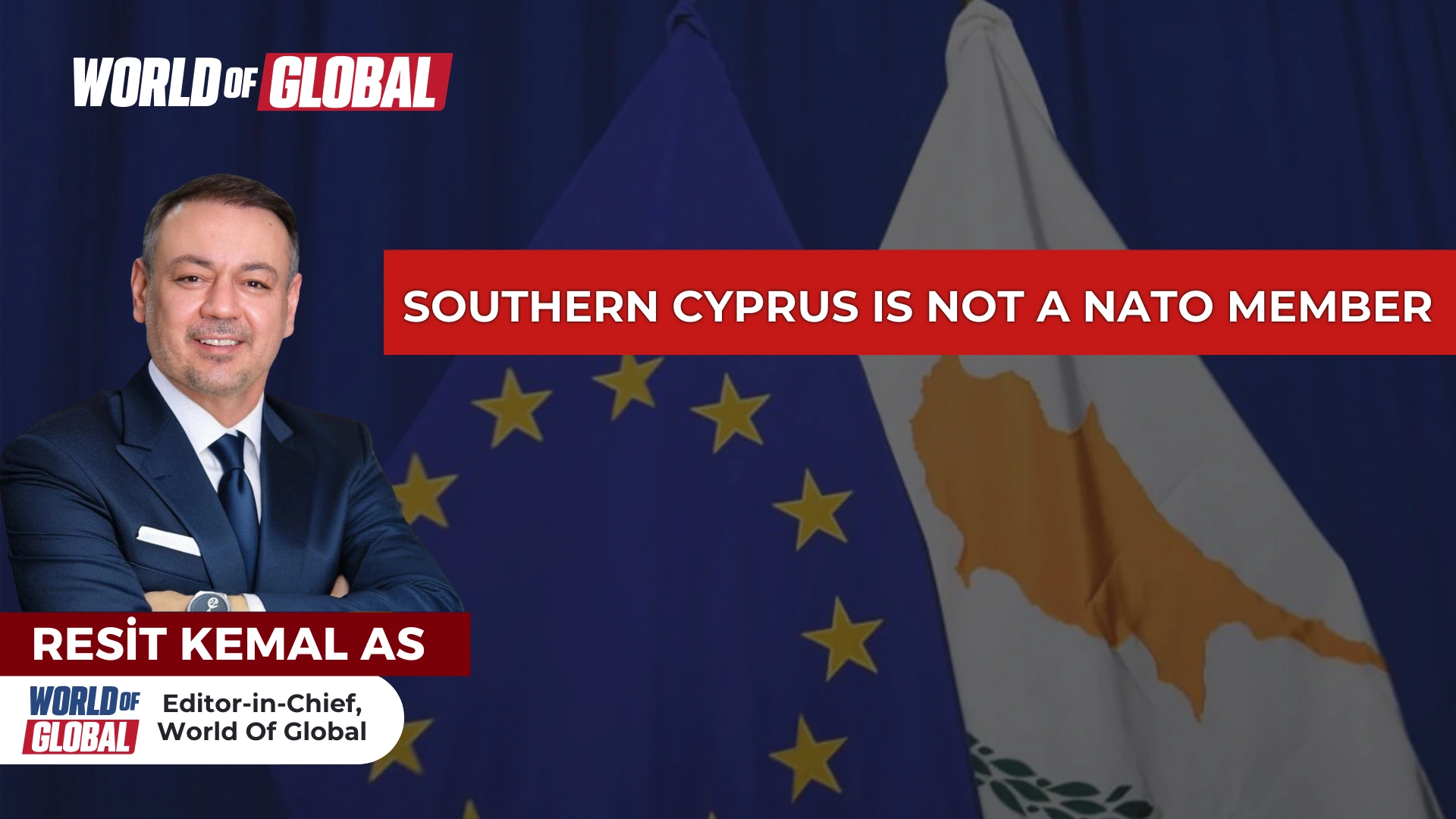
The Greek Cypriot Administration of Southern Cyprus is not a NATO member.
This means that even if a military defense reflex were to operate through NATO, such a mechanism would not apply to Southern Cyprus. Despite this, European countries justifying the deployment of warships by saying “we are protecting our EU member” naturally raises a question:
Is this truly a defense reflex, or a political message?
Developments in the Eastern Mediterranean in recent years provide important clues to understand the answer. Energy resources, maritime jurisdiction disputes, trade routes, and military bases have intensified competition in the region. For this reason, every warship sent to the area—even if technically framed as defensive—politically represents a show of force.
At the heart of the issue lies Europe’s strategic perspective toward the Eastern Mediterranean.
The European Union often shapes its political decisions not purely through legal reasoning, but through geopolitical calculations. As a result, there are sometimes significant gaps between the narratives used and the real objectives behind them.
The phrase “we are protecting our member” appears to be exactly such a diplomatic formula.
Because when a structure that is not a military alliance produces security rhetoric through warships, it inevitably raises questions from both an international law and strategic logic perspective.
At this point, Türkiye’s position is also noteworthy.
Türkiye is not only a coastal country in the Eastern Mediterranean but also one of the region’s most significant military and geopolitical actors. Therefore, every military move in the region is closely monitored by Ankara.
In reality, the essence of the debate in the Eastern Mediterranean comes down to a much simpler point:
When genuine security concerns and political messages become intertwined, what emerges is often not a convincing strategy, but a weak justification.
History has shown us many times that when the intention behind an action is strong, explanations are brief.
But when the intention is questionable, explanations tend to grow longer.
Today, the statements coming from the Eastern Mediterranean seem to remind us of exactly that.
Because sometimes the excuses become larger than the actions themselves.