
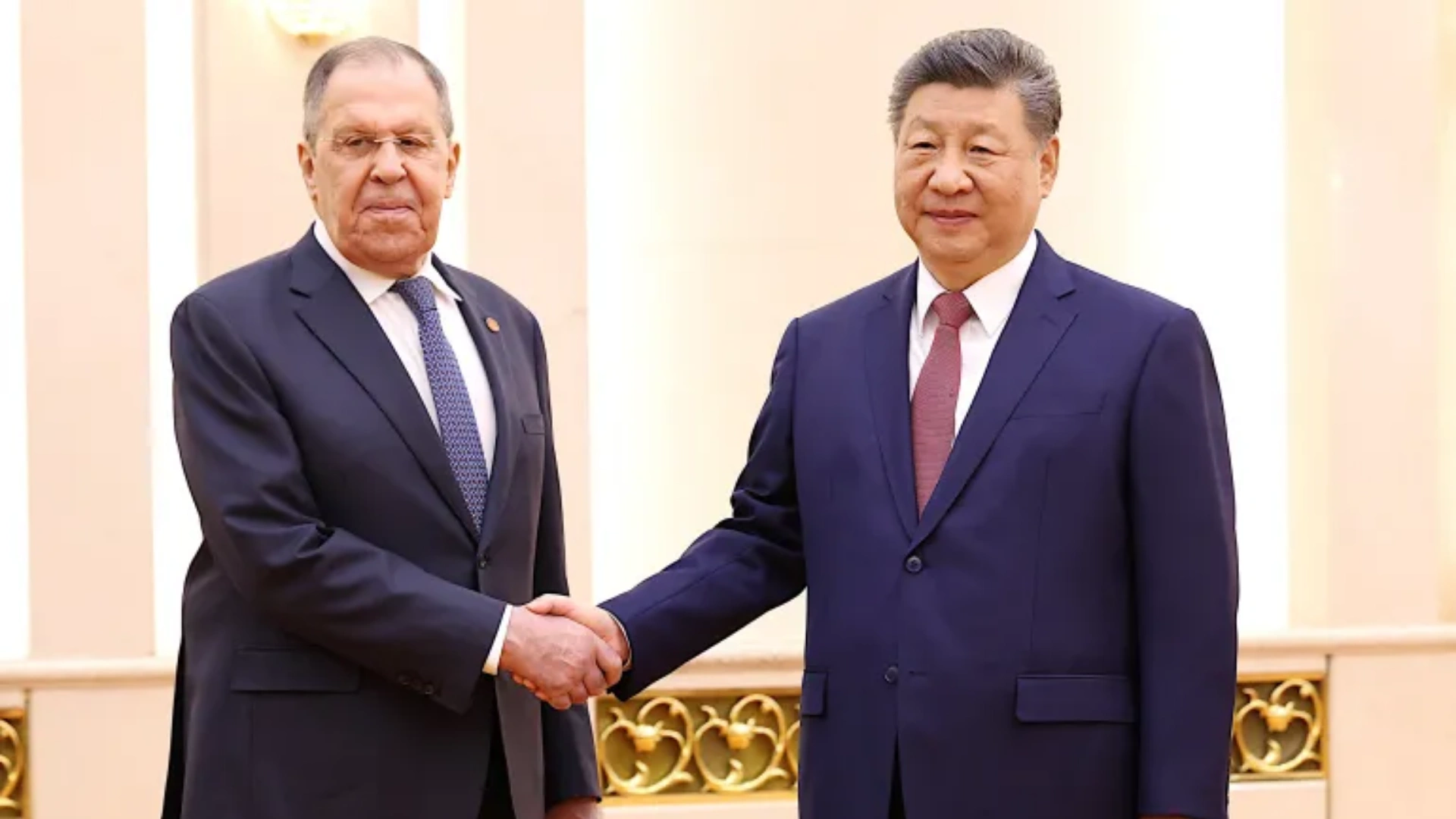
Russian Foreign Minister Sergey Lavrov held talks with Chinese President Xi Jinping during his visit to Beijing. Following the meeting, Lavrov made statements to the press.
As part of his Beijing visit, Lavrov was received by Xi Jinping. Speaking at a press conference after the meeting, he addressed key issues on the international agenda.
Regarding Russia-China relations, Lavrov said, “I fully agree with the description that our relationship is unshakable in the face of any storm,” and added:
- Russian President Vladimir Putin is expected to visit China in the first half of this year.
- Thanks to cooperation between the two leaders, relations between Moscow and Beijing demonstrate strong resilience against global economic and geopolitical turbulence.
- Global tensions are increasingly taking on a military dimension.
Situation in the Middle East
- The Middle East is a flashpoint that will not be easy to resolve.
- Had Iran not been attacked, it would not have targeted U.S. assets in Arab countries. Middle Eastern countries understand this.
- The issues of Palestine, Gaza, and the West Bank must not be overshadowed or pushed aside. Russia and China are in agreement on this.
- Russia and China have every opportunity to avoid becoming dependent on developments similar to those in the Middle East.
- In the context of the ongoing energy crisis, Russia can help cover resource shortages for China and other countries.
- Russia hopes the United States will not continue its aggressive actions in the Middle East, which are now harming even its allies.
- Washington and Tehran should continue negotiations.
Relations with Iran
- Moscow continues to develop its relations with Tehran in full compliance with international law.
- Russia recognizes Iran’s right to enrich uranium for peaceful purposes.
- Russia is ready to play a role in resolving issues related to enriched uranium.
- The International Atomic Energy Agency (IAEA) has not expressed any doubts that enriched uranium could be used for military purposes.
Relations with the United States
- Communication has not been frozen.
- Some talks between the two countries are not disclosed to the public.
- Russia remains committed to agreements reached with the U.S. in Alaska.
- Moscow has no illusions about Washington’s true objectives, despite its claims of acting in line with national interests.
- There are companies in the U.S. willing to cooperate with Russia on a mutually beneficial basis.
Ukraine and Europe
- Russia remains ready for peace negotiations.
- Agreements reached in Alaska are being blocked by European elites.
- The U.S. is advancing the militarization of the EU to avoid responsibility for its actions in Ukraine.
- Washington aims to shift the task of containing Russia to Europe so it can focus on China.
- It is not even being hidden that efforts are underway to create an anti-Russia military bloc involving Ukraine, with practical steps being encouraged.
- According to Washington, Kyiv would be a leading member of this new military bloc.
- All countries must comply with UN rules, yet the West continues to violate them.
- There are attempts to turn Serbia into a buffer zone against Russia.
- French President Emmanuel Macron is enthusiastic about the idea of establishing a stabilization force in Ukraine.
- Moscow warns against the dangers of the European Union’s rapid and intense militarization.
- It is Hungarian politician Peter Magyar’s personal choice not to seek contact with Putin after his party’s parliamentary election victory.
Cuba
- Russia hopes the United States will not return to an era of colonial wars.
- Russia has repeatedly reaffirmed its strong support for the sovereignty and independence of Cuba.
- The U.S. should begin dialogue with leaders of countries it does not favor.
- Moscow will continue to provide political and economic support to Havana.