
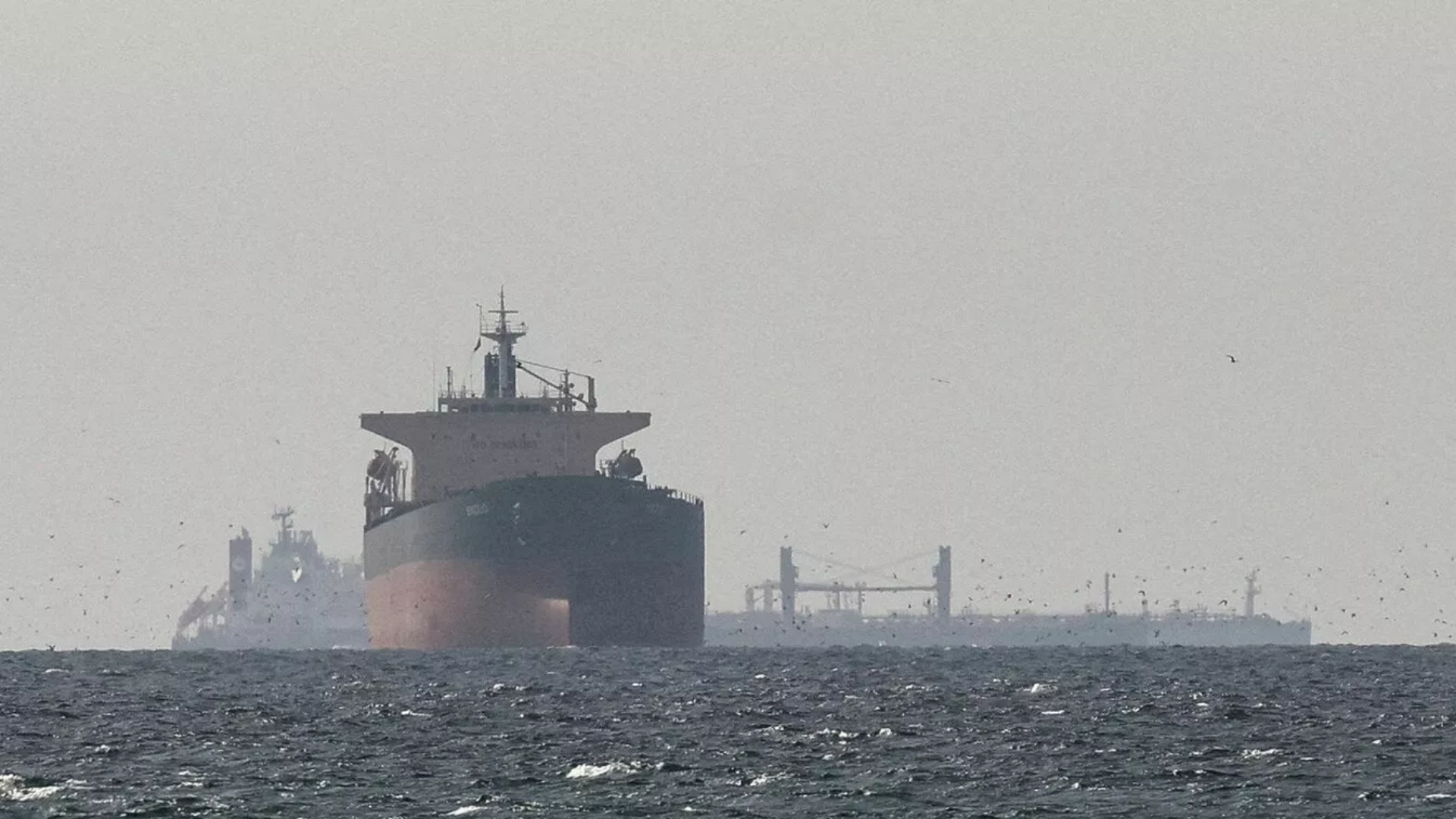
Iran’s state television announced that a draft of an informal memorandum of understanding prepared with the United States has been obtained. Meanwhile, Ali Bagheri, Deputy Secretary of Iran’s Supreme National Security Council, stated that Iran and Oman are discussing a new mechanism for maritime traffic in the Strait of Hormuz.
Iranian state television shared details of what it described as the “first informal memorandum framework” drafted between Tehran and Washington.
According to the report, the draft — referred to as the “Islamabad Memorandum” — envisages the withdrawal of U.S. military forces from areas surrounding Iran and the lifting of the naval blockade. In return, Iran would commit to restoring commercial shipping traffic through the Strait of Hormuz to pre-war levels within one month.
Iranian state television noted that military vessels are not included in the agreement. It also stated that the management and routing of maritime traffic in the Strait of Hormuz would be carried out jointly by Iran and Oman.
The report further claimed that if the parties reach a final agreement within 60 days, the memorandum could become a binding United Nations Security Council (UNSC) resolution. However, Iranian officials stressed that the framework has not yet been finalized and that no steps would be taken without “concrete verification.”
So far, no official statement has been made by Washington regarding the draft text.
“New Mechanisms Being Discussed With Oman”
According to Iran’s semi-official Tasnim News Agency, Bagheri spoke to the press while attending the 14th International Meeting of High Representatives for Security Issues in Moscow.
Bagheri stated that no agreement has yet been reached with the United States regarding the Strait of Hormuz, saying:
“Iran and Oman, as neighboring coastal states, are negotiating to establish a new mechanism for passage through the Strait of Hormuz. The conditions and regulations for passage through the Strait of Hormuz will differ from the period before the war against Iran began.”
He also noted that indirect talks with the United States are continuing and that the future of Iran’s enriched uranium reserves is not currently on the negotiation agenda.
“Until we reach an agreement on all issues, we believe we have not reached an agreement on any issue,” Bagheri said.
IRGC Sends Message on Hormuz
Mohammad Akbarzadeh, Deputy Political Chief of the Navy of Iran’s Islamic Revolutionary Guard Corps (IRGC), warned that if the United States launches another military attack, Iran would turn the coastline stretching from the Gulf of Oman to the Persian Gulf into a “graveyard for aggressors.”
Akbarzadeh stated that Iran’s armed forces are fully prepared and argued that the likelihood of a new war is low.
“Today, we carry in the hearts of our fighters the desire for direct confrontation with the enemy,” he said, claiming that the United States had suffered a strategic failure regarding the Strait of Hormuz.
The Iranian official added:
“They said they could reopen the Strait of Hormuz, but despite all their power, they failed to do so.”
Akbarzadeh also said:
“Americans think they can speak to Iran using the language of threats, but they still have not learned that this is not the way to speak to Iranians.”